
The Bottleneck: Why Youth Rugby Stalled in America
American youth rugby has no shortage of demand, coaches, or goodwill. What it lacks is full-time professional leadership. Here is why that single gap has capped the sport's growth.
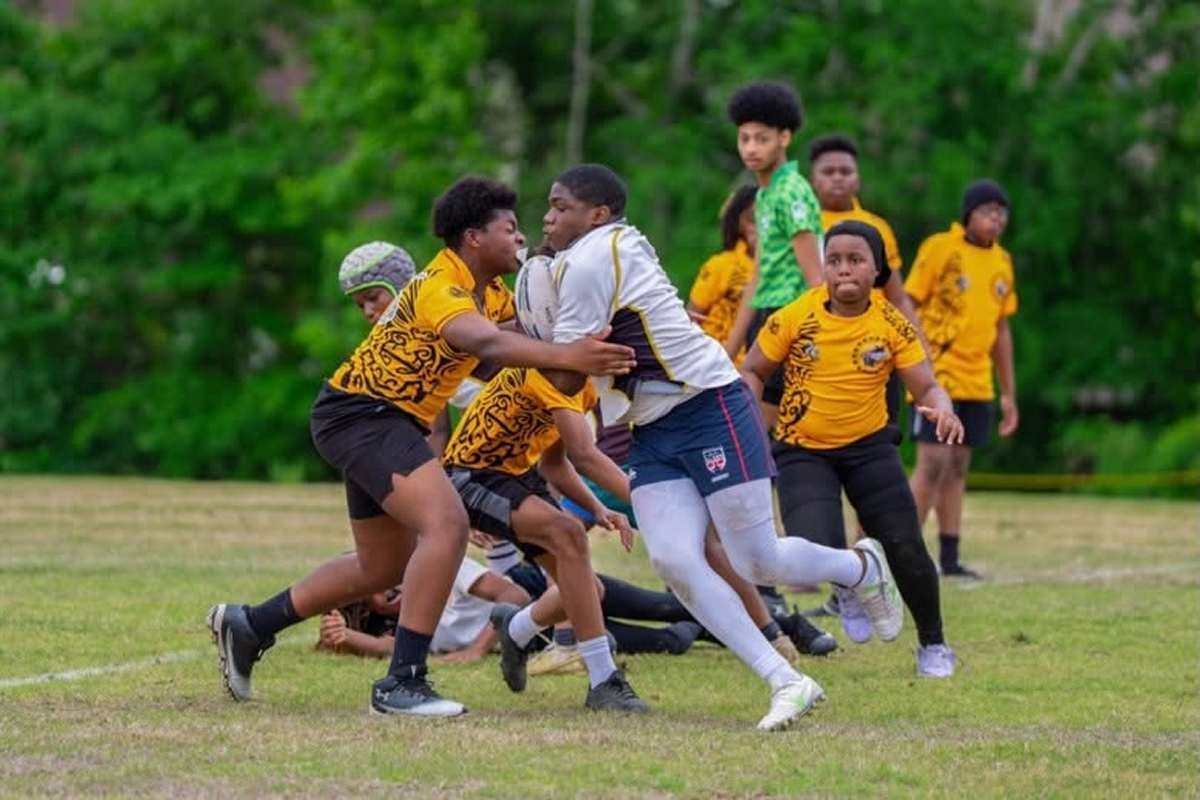
Ask why rugby has not broken through in the United States and you will get a familiar list of answers. Not enough fields. Not enough television. Not enough kids who grew up watching it. Competition from football, soccer, and lacrosse for the same athletes and the same seasons.
Those answers are not wrong. They are just not the constraint.
The constraint is simpler and harder. Almost nobody in American youth rugby does this work full time.
The number that explains the rest
Across the country, the top leadership of youth rugby is effectively 100% volunteer-driven. The people building programs are teachers, coaches, parents, and former players doing it in the hours left over after their actual jobs. They are extraordinarily committed. They are also, structurally, part time.
That single fact cascades into everything else. A volunteer director can run practices. A volunteer director cannot spend Tuesday morning in a meeting with a school district, Wednesday writing a foundation grant, and Thursday building a three-year budget. Fundraising, school partnerships, governance, data collection, staff management, and succession planning are not evening activities. They are the job.
So programs get built on personal energy rather than institutional capacity. They run beautifully for a few years. Then the founder burns out, moves, or ages out of the role, and the program goes with them. American rugby has watched this cycle repeat for decades and consistently misdiagnosed it as a participation problem.
It is a leadership capacity problem.
Three cities
There is a straightforward way to test this. Count the youth rugby programs in the country that meet the Tier 1 standard: sustained year-round programming, real operating budgets, professional staff, school partnerships, wrap-around athlete support, and measurable outcomes.
The list is Memphis, Dallas, and Los Angeles. Three cities, in a country of more than 300 markets.
Look at what those three have in common and it is not climate, rugby history, or proximity to a professional club. It is that each one has full-time, paid, professional leadership running the organization. That is the variable. Everywhere the sport has reached scale and stayed there, somebody was paid to make it their life's work.
What the model produces when it exists
The gap between a Tier 1 program and a well-intentioned volunteer club is not marginal. Inside Tier 1 wrap-around programs, annual athlete retention runs at 70%. In a youth sports landscape where most kids quit organized sport by 13, keeping seven in ten year over year is not a rugby statistic. It is a youth development statistic.
Retention is what makes everything else possible. An athlete who stays for four years is an athlete who can be supported into college. A family that stays for four years becomes part of a community. A program that retains becomes a program that can prove outcomes, and a program that can prove outcomes can raise money from funders who have never watched a rugby match.
None of that is available to a program that loses half its roster every year because nobody has the hours to build the systems that hold kids in.
Why more coaches will not fix it
The instinct in American rugby has been to solve for coaching. Certify more coaches, run more clinics, seed more clubs. It is a reasonable instinct and it has produced real value.
It also has a ceiling, because coaches do not build organizations. Coaches deliver programming inside organizations that somebody else built and somebody else sustains. Send ten certified coaches into a market with no full-time leader and you get ten disconnected efforts, no budget, no school agreements, no data, and no plan for what happens in year four.
The bottleneck is not the number of people who can teach a ruck. It is the number of people who can build the thing the ruck happens inside.
The premise of Strive Rugby
Strive Rugby starts from that diagnosis. Fewer than five Tier 1 youth rugby programs exist nationwide, the bottleneck is leadership, and leadership requires runway, training, and community.
So the fellowship invests in people rather than programs. It recruits high-potential leaders from any industry, trains them inside the programs that already work, and pays them a salary, not a stipend, for three years while they build a new organization in a new city. Salary, not stipend. Capital, not goodwill.
The bet is that if you solve leadership, the programs follow. Memphis, Dallas, and Los Angeles suggest that bet is already proven. It has just never been deliberately reproduced.
Choose how you help build sustainable youth rugby: give, partner, lead or join.
Donor
Fund the pilot. About $500K per market secures a three-year fellow investment, managed and deployed by the US Rugby Foundation.
Partner
Schools, facilities, community allies, and corporate or philanthropic partners who help build a program on the ground.

BACKED BY THE US RUGBY FOUNDATION
Strive Rugby is a Foundation program — financed and run on its systems, not a startup asking for trust it hasn't earned. Every local gift flows through a 501(c)(3) public charity operating since 1963, is restricted entirely to this market, and is tax-deductible to the fullest extent of the law. US Rugby Foundation holds, manages, and deploys the capital including structuring local match and co-investment. Learn more about the US Rugby Foundation at usrugbyfoundation.org.